Construction
by the numbers
From measuring the room to the thickness of a single tread. What every parameter in the configurator means and which codes stand behind each number.
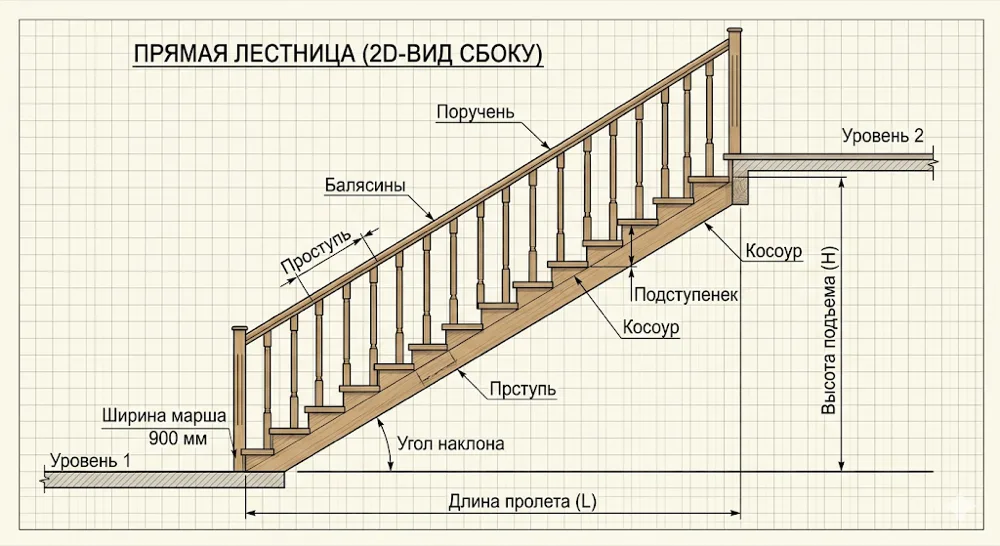
Straight staircase
The simplest classic configuration — connects two levels in a straight line, with no turns and no change of direction.
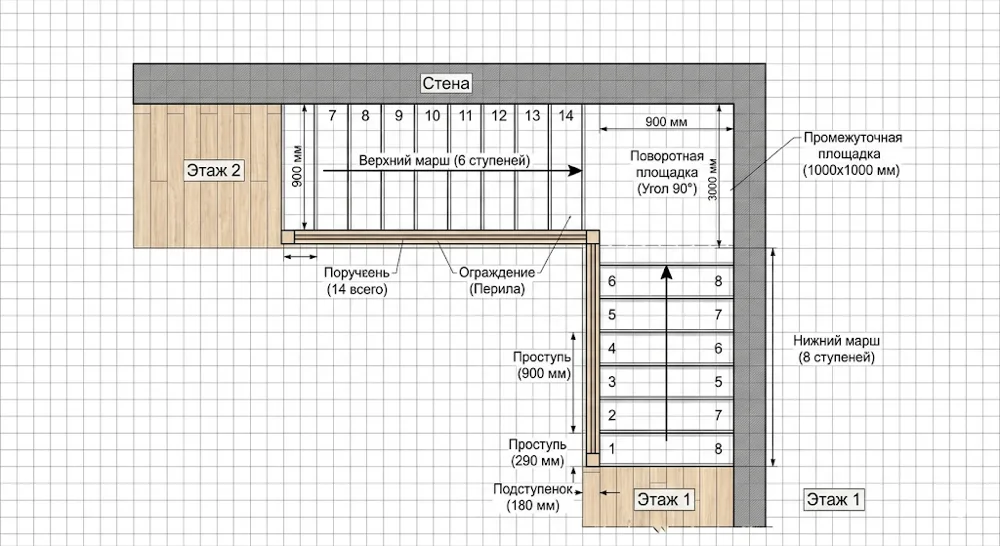
L-shaped staircase
A configuration of two flights at a right angle — forms an «L» from above. Often placed in a room corner; saves length.
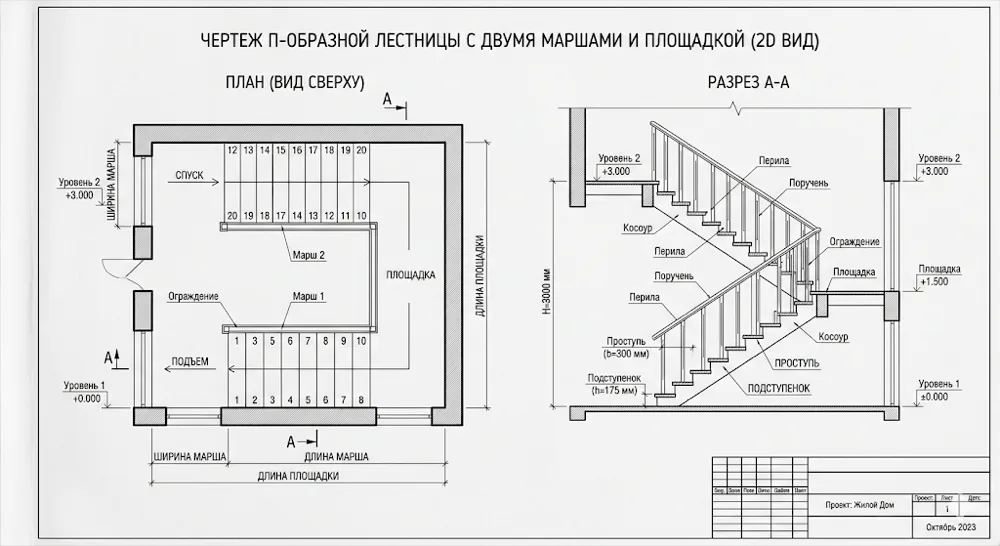
U-shaped staircase
Two parallel flights with a 180° turn — the most popular type in multi-storey buildings. «Folds» the length in half.
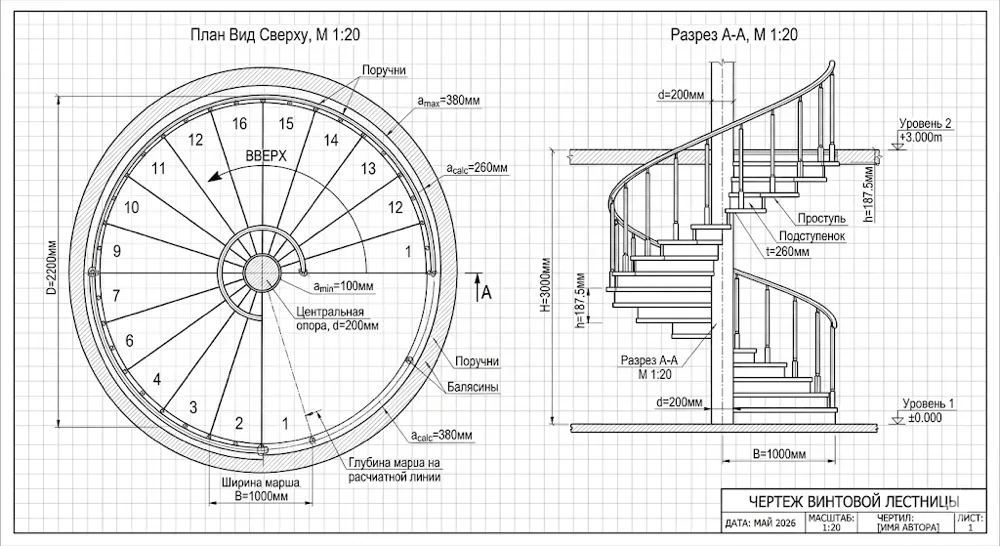
Spiral staircase
Steps arranged in a circle around a central axis — the most compact form, occupying 1.5–2 m². A striking decorative element.
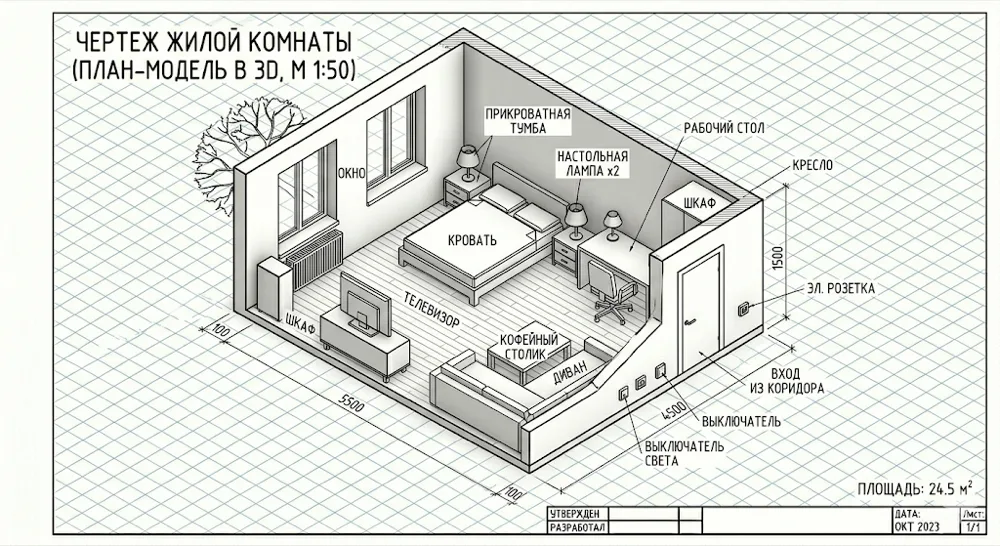
Room
The dimensions of the room — length, width, and height — where the stair will be installed. A foundational concept in architecture and construction.
Room length
Distance from one wall to the opposite wall — the largest dimension of a rectangular room.
Room width
Distance between two opposite walls — the smaller dimension of a rectangular room.
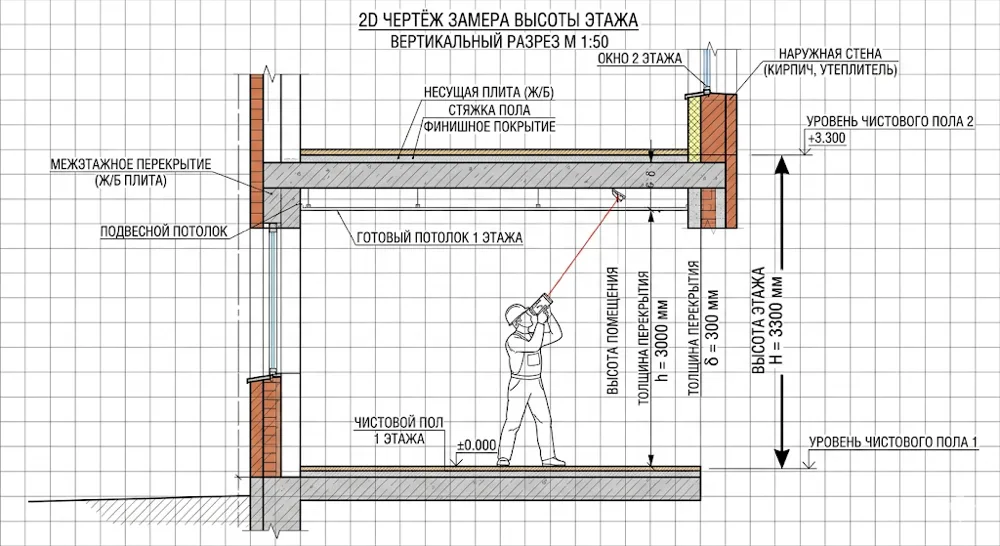
Floor height
Vertical distance from the finished floor of one storey to the finished floor of the next, including slab thickness.
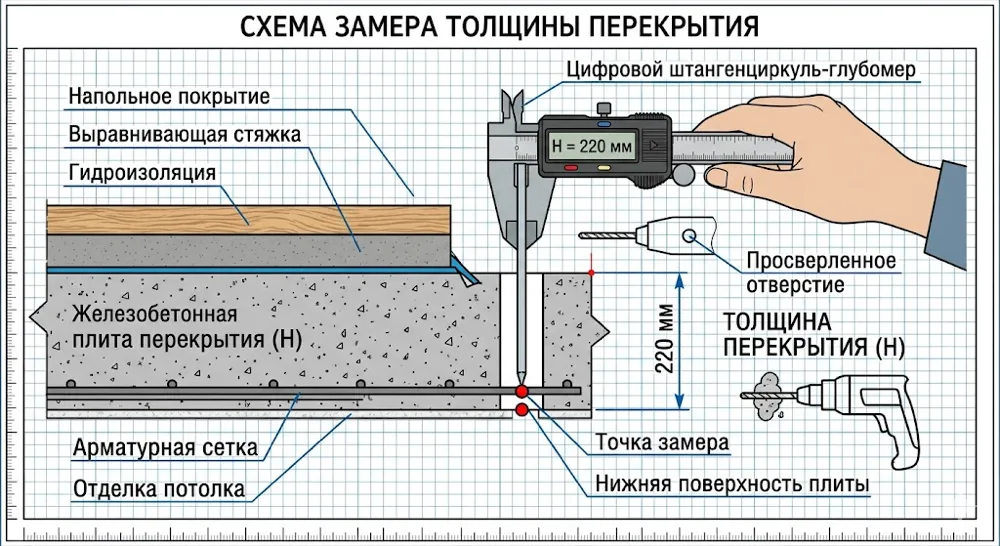
Slab thickness
Total thickness of the structure separating adjacent storeys — from the lower room's ceiling to the upper room's floor.
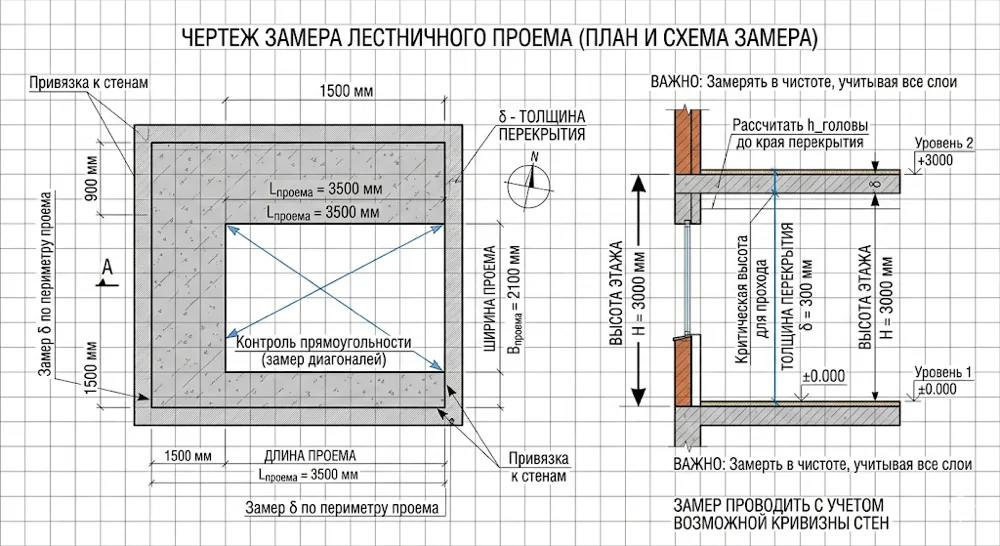
Opening
A through hole in a wall, partition, or floor slab. In the configurator, this means the stairwell opening.
Lock the opening
A configurator option that prevents moving the opening with the cursor. Useful when fine-tuning dimensions through value input.
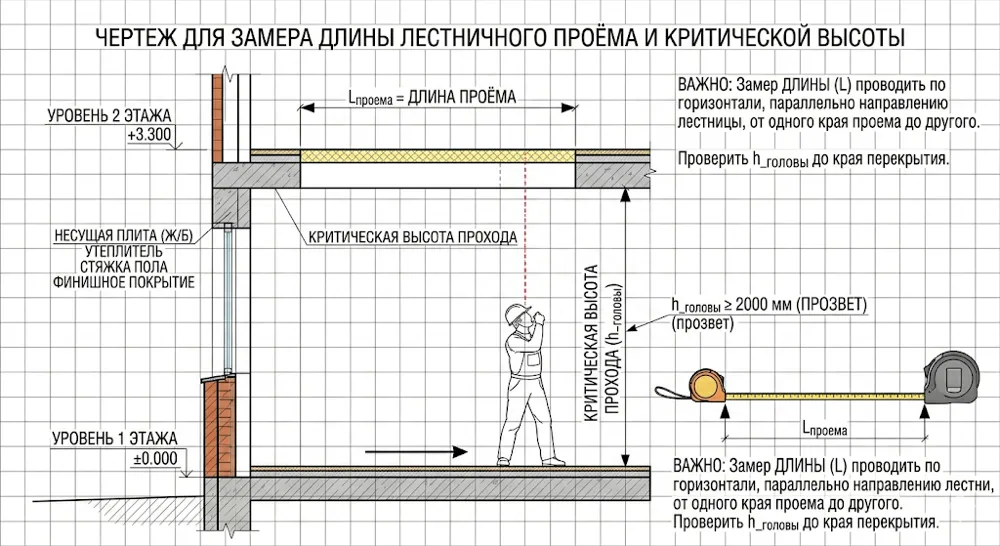
Opening length
The longitudinal (largest) dimension of the slab opening, measured parallel to the direction of ascent. The most important size for the stair.
Opening width
The transverse dimension of the opening, perpendicular to the direction of ascent. Defines shoulder comfort and the ability to carry large furniture upstairs.
X position
Moves the stairwell opening along wall X. Used when the opening is not in a room corner.
Offset from far wall
Moves the stairwell opening along wall Y. Used when the opening is not in a room corner.
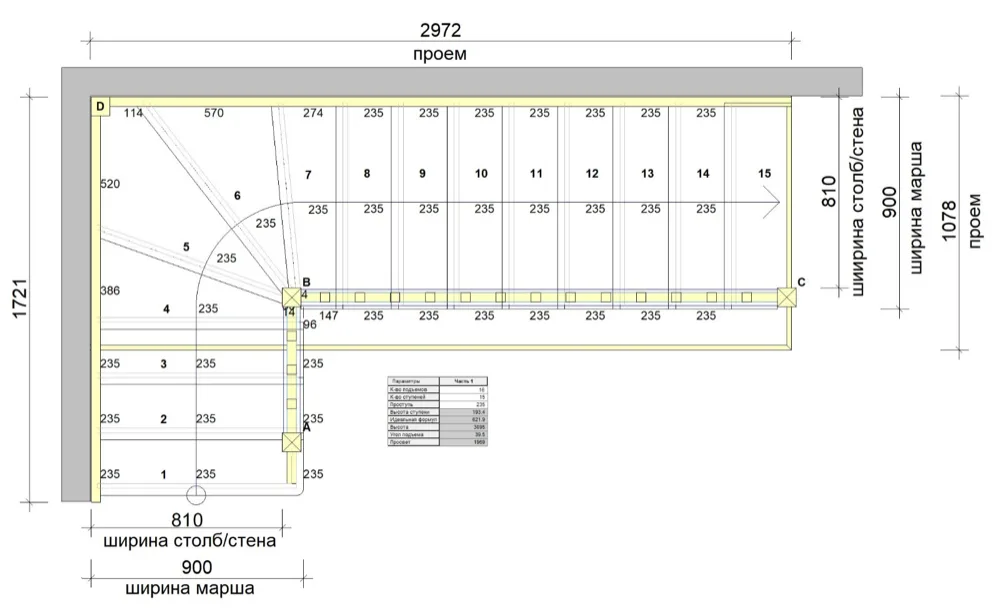
Flight width
Distance perpendicular to the movement direction, between the structures bounding the passage. Total and clear widths are distinguished.
Tread thickness
Vertical size of the horizontal part you step on. Affects strength, freedom from squeaks, and precise step-height calculation.
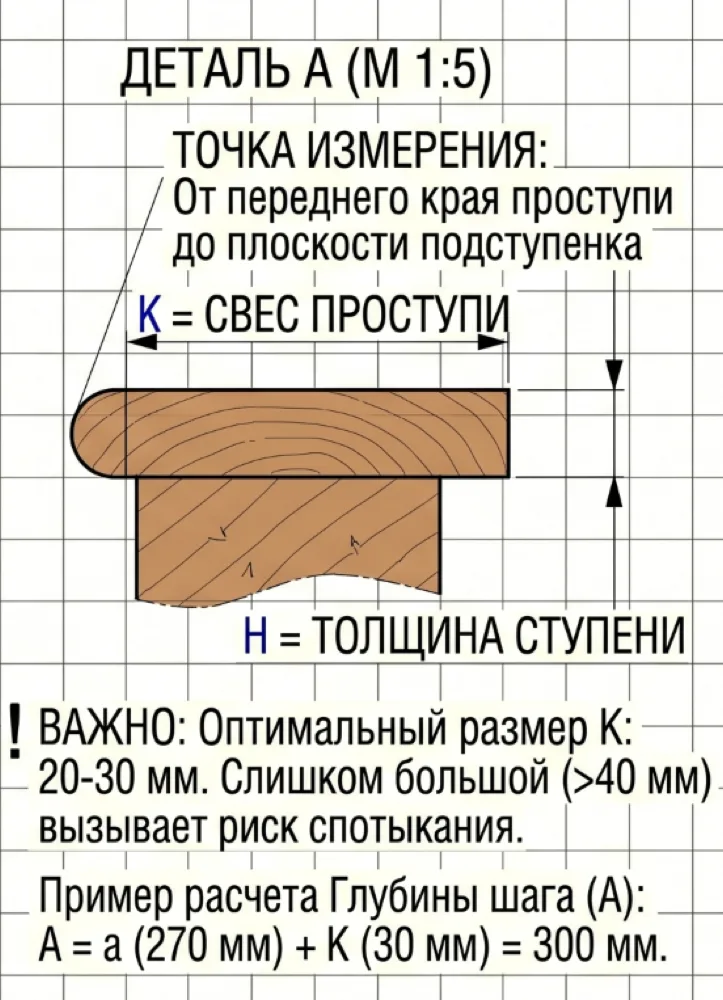
Tread overhang (nosing)
How far the horizontal tread overhangs the riser or frame. The «nose» visible from the side.
Stringer type
The stair's main load-bearing structure — its «skeleton». Carries the weight of treads, rails, people, and furniture and transfers it to slabs and walls.
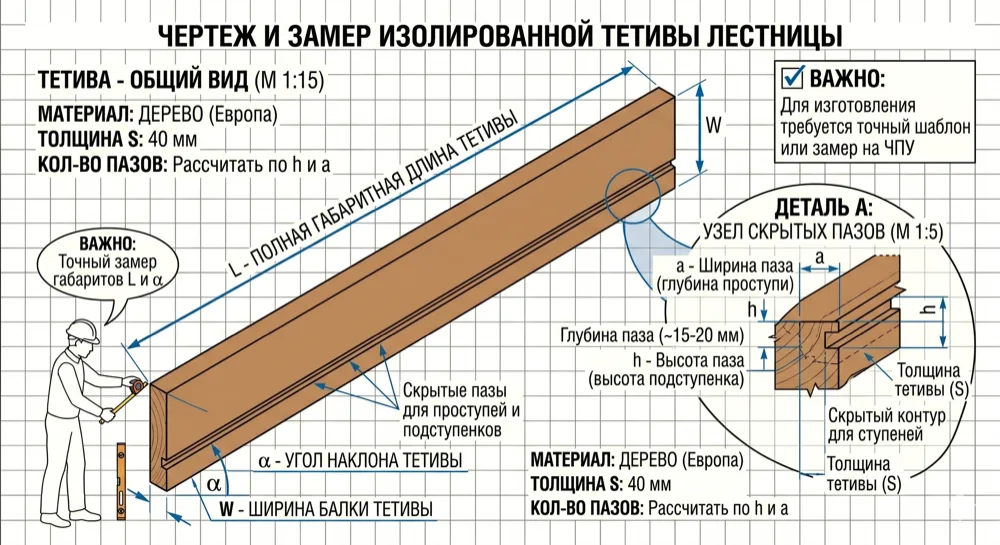
Closed stringer
An inclined beam with a flat top edge. Treads attach into side grooves; their ends are hidden from view.
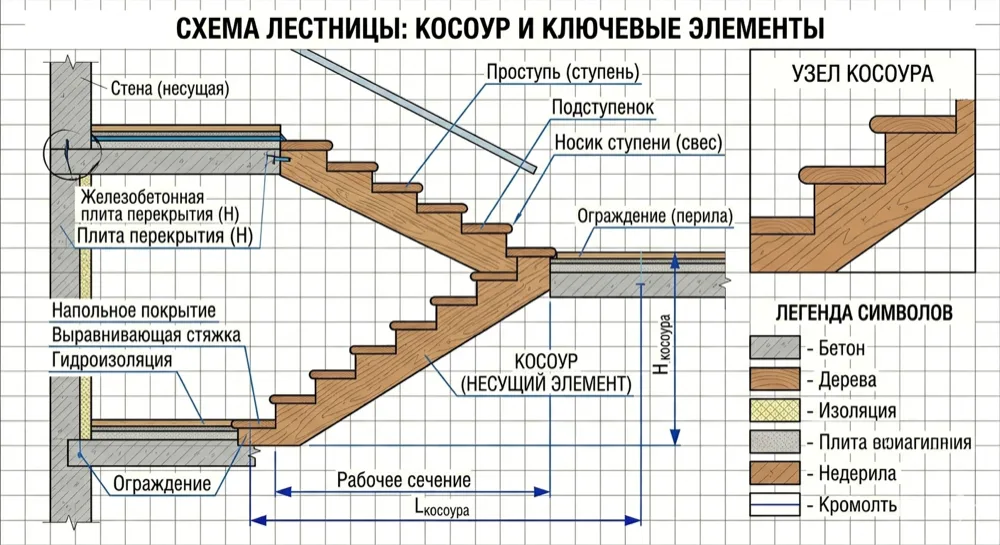
Sawtooth carriage
The most common and reliable type of stair beam. The top edge is cut into a «sawtooth» pattern with treads sitting on top of the teeth.