Flight width
Distance perpendicular to the movement direction, between the structures bounding the passage. Total and clear widths are distinguished.
01 /Total and clear width
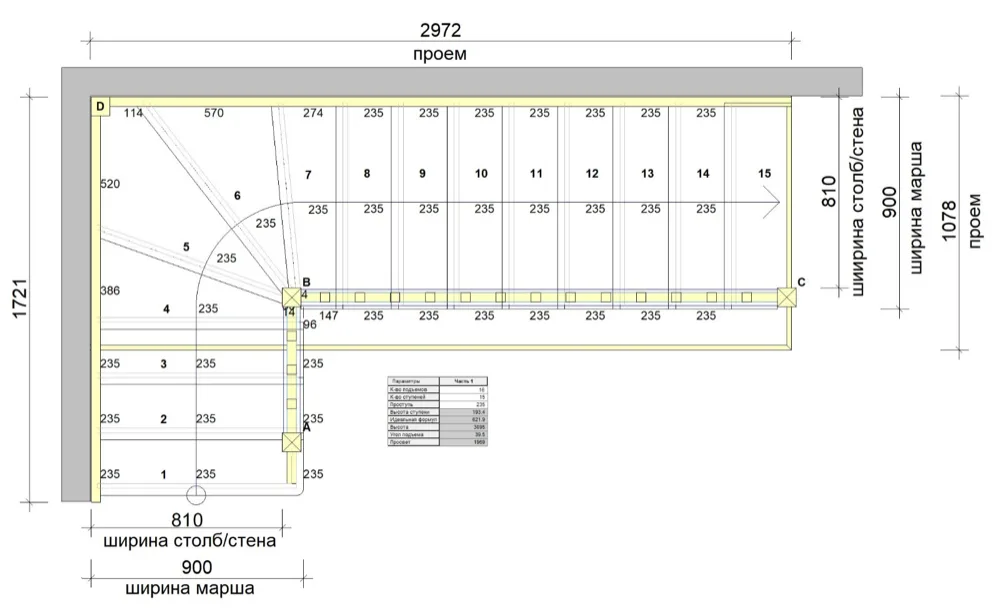
Stair flight width (also called stair march width or simply stair width) is the distance perpendicular to the direction of movement, measured between the most protruding parts of the structures bounding the passage.
For correct design and measurement, two types of width must be distinguished:
Total flight width (structural)
This is the overall size of the entire stair structure. It is measured from one outermost element to another. For example, if a stair abuts a wall on one side and has an open edge on the other, the total flight width is the distance from the wall surface to the outer edge of the opening covering or carriage.
Clear (usable) flight width
This is the actual free space left between obstacles for a person's passage (typically between the wall and the railing). This is the size that determines movement comfort, the stair's throughput, and the ability to carry bulky furniture. Clear width is always less than total width.
02 /Main dependencies and allowances when calculating clear width
The clear stair width is calculated by subtracting the critical allowances from the total width:
Clear tread width
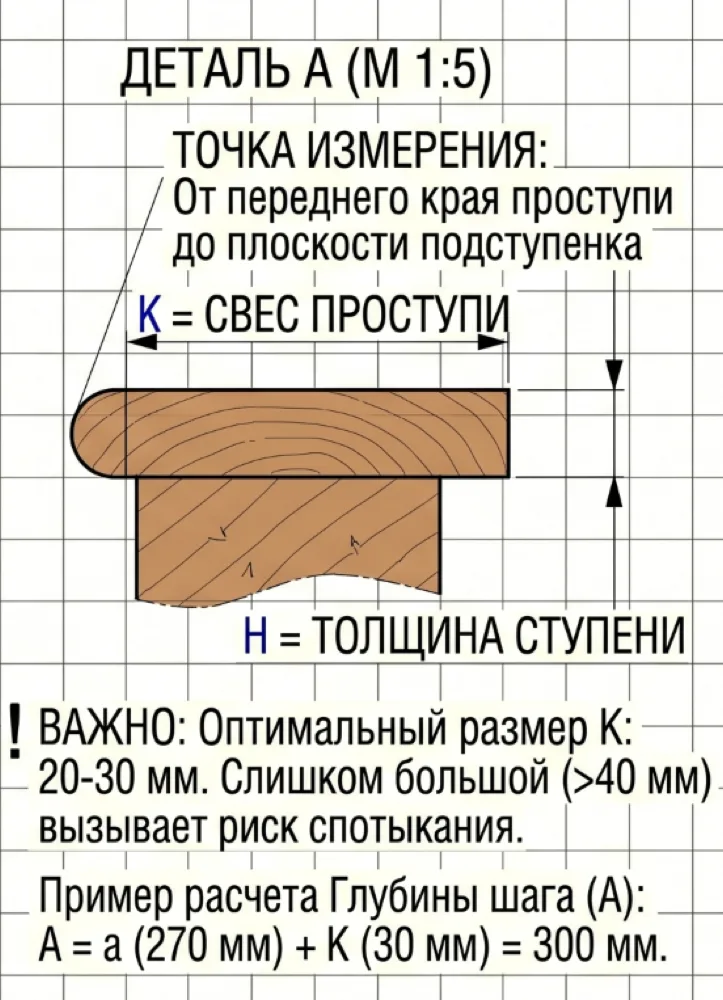
This is the width of the step itself, on which you actually place your foot (standard 900–1000 mm for one person).
Railing thickness
Handrails consume part of the total passage width.
Installation gap
Space between structures needed for installation and finishing.
Hand clearance at the rail
The most important ergonomic element. If the stair runs along a wall, leave at least 50–80 mm between the wall and the handrail so you do not bruise your knuckles against the wall while walking.
03 /Why clear width matters for safety and comfort
Throughput
In private houses a clear flight width of 900–1000 mm is considered sufficient for comfortable single-person passage. At 1200 mm two people can already pass each other freely.
Furniture moves
This is the main everyday problem with narrow stairs. If the clear passage width is less than 900 mm, lifting a non-disassembled sofa, bathtub, or large double mattress to the second floor becomes impossible. Consider this when pouring the opening in a shell-and-core new build.
Ergonomics and handrails
Handrails consume useful space. If the opening cutout is made flush with the step width, the handrails will «eat» the passage width so that you have to walk sideways. Always make the opening at least 15 centimetres wider than the clear width of the future stair.