Floor height
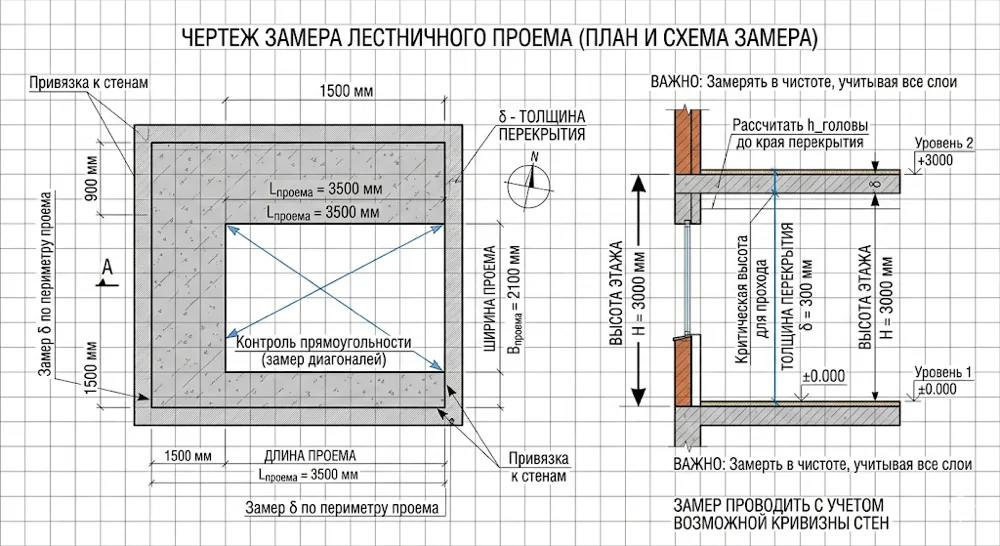
Vertical distance from the finished floor of one storey to the finished floor of the next, including slab thickness.
01 /Floor height vs ceiling height
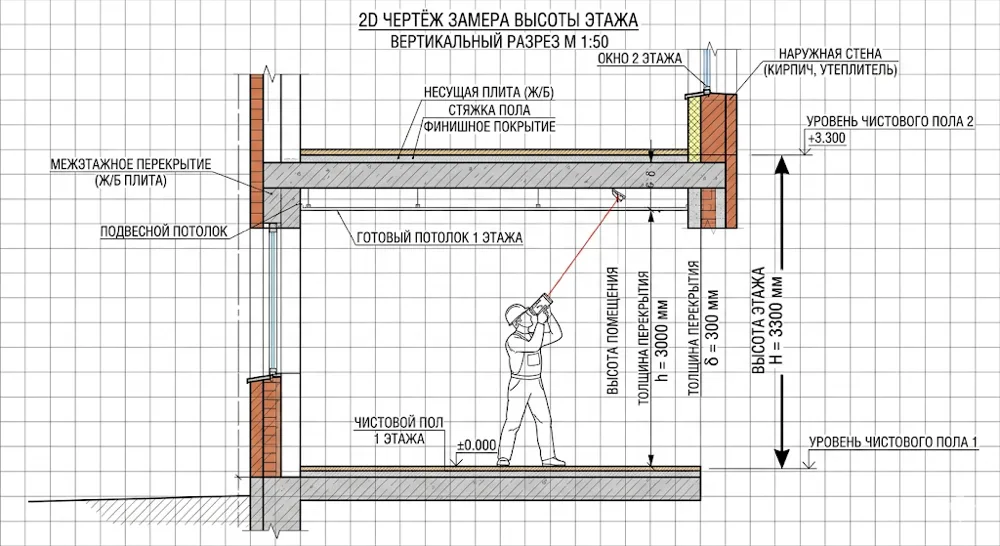
In architecture and construction, floor height is the vertical distance from the finished floor of a storey to the finished floor of the storey above (including slab thickness).
It is a fundamental parameter in any building design. Knowing the floor height, architects calculate the number of steps in stair flights, the length of utilities, and the overall building dimensions.
This is the main confusion people face when reading drawings.
Room height (clear height)
This is the visible space inside the room — the distance from the finished floor covering (e.g. laminate) to the finished ceiling.
Slab thickness
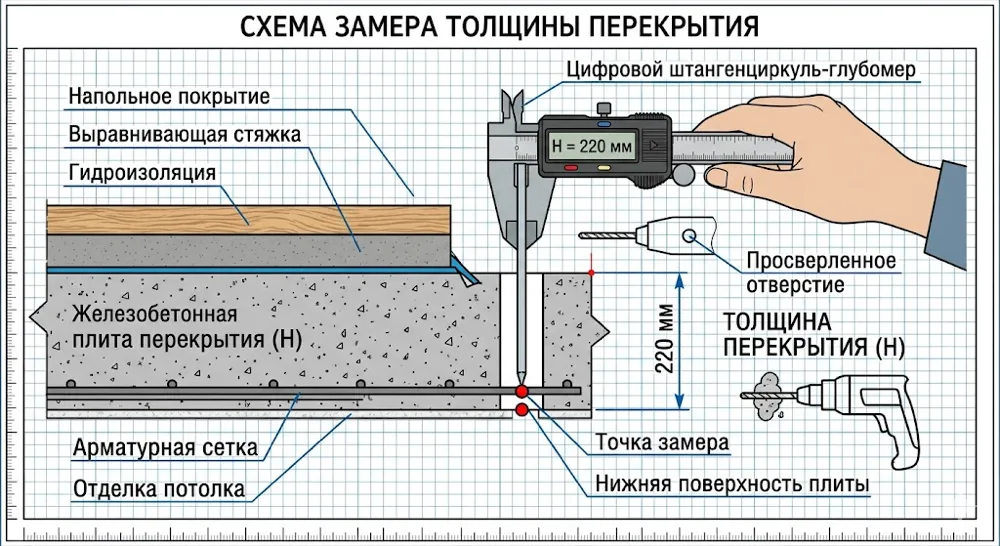
It is the construction «cake» separating the storeys. It includes the load-bearing slab itself (reinforced concrete or wooden), the screed, the floor covering of the upper storey, plus the ceiling elements of the lower storey (plaster, suspended or stretch ceiling).
Formula
Floor height = clear room height + thickness of the floor slab.
02 /Standard values
In typical modern housing, floor height is most often designed at 2.8 m, 3.0 m, or 3.3 m.
If a drawing shows a floor height of exactly 3 metres, then due to slab and screed thickness (usually taking 200–300 mm), the actual ceiling height in your room will be about 2.7–2.8 metres.