Stringer type
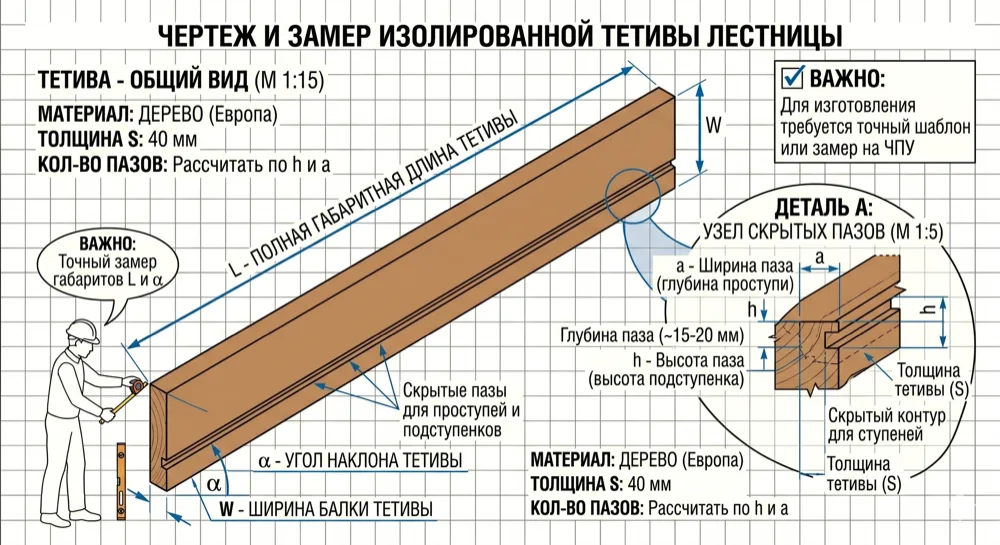
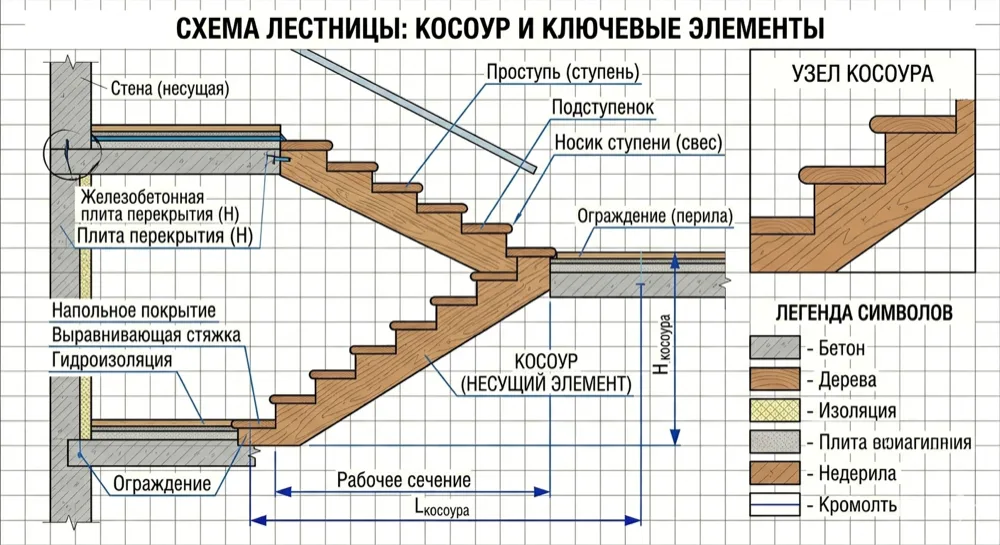
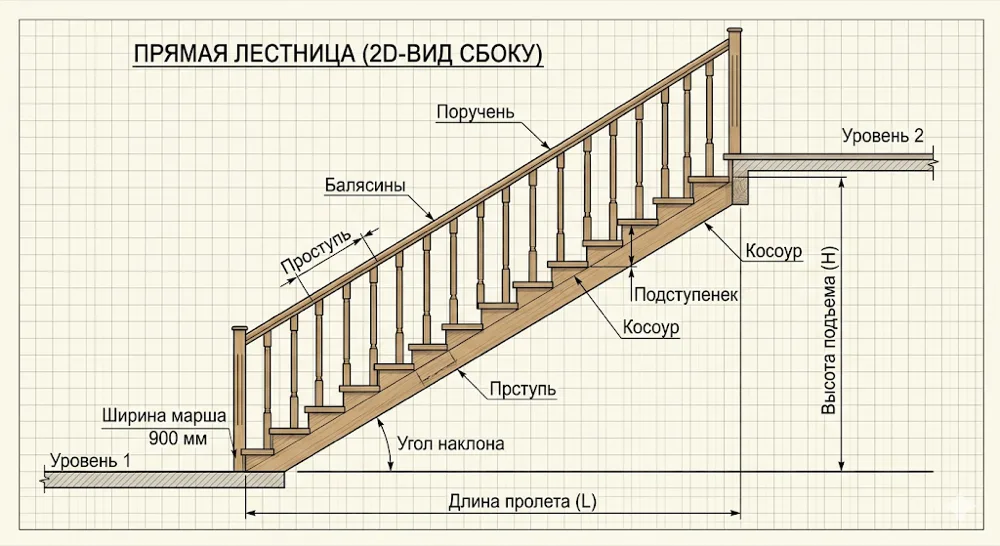
The stair's main load-bearing structure — its «skeleton». Carries the weight of treads, rails, people, and furniture and transfers it to slabs and walls.
01 /1. Sawtooth carriage
A stair's stringer is the main load-bearing structure — its very «skeleton». This element bears the entire load: the weight of the treads, the railings, people walking, and heavy furniture being moved. The collected load is reliably transferred to the floor slabs and the load-bearing walls of the house.
The choice of stringer determines the stair's design, strength, and assembly method.
Here are the 5 main types of stringers in modern construction:
The most common and reliable option. A sawtooth carriage is an inclined beam with the top edge cut into a «sawtooth» pattern (teeth).
How treads attach
They sit on top of the cuts.
Notable feature
Viewed from the side, you clearly see the tread ends. The stair can rest on a single sturdy central carriage or on two at the sides.
02 /2. Closed stringer
Also an inclined beam like the sawtooth carriage, but with a perfectly straight top edge.
How treads attach
They are not placed on top — they slot into the side, into special grooves cut on the inner side of the stringer.
Notable feature
From the side, the tread ends are not visible — they are completely hidden behind the beam's smooth surface. Closed-stringer stairs look more classic and massive.
03 /3. Bolts (from German Bolzen — bolt)
This system has no traditional inclined beams at all.
How treads attach
One end of each tread is permanently set into the load-bearing wall (or fixed to it with brackets), and on the other (hanging) side the treads are joined to each other by special steel bolts — Bolzen.
Notable feature
The stair looks transparent, light, and seemingly «floats» in the air, while each tread can carry up to several hundred kilograms.
04 /4. Central post (central pillar)
The main load-bearing element for classic spiral stairs.
How treads attach
It is a sturdy vertical tube (usually steel) around which winder steps fan out in a spiral, attached by their narrow ends.
05 /5. Monolithic slab
Used when casting heavy reinforced-concrete stairs.
Notable feature
There are no separate load-bearing beams. The entire inclined base of the stair (a reinforced concrete slab) cast together with the steps is itself a single, ultra-strong load-bearing element.