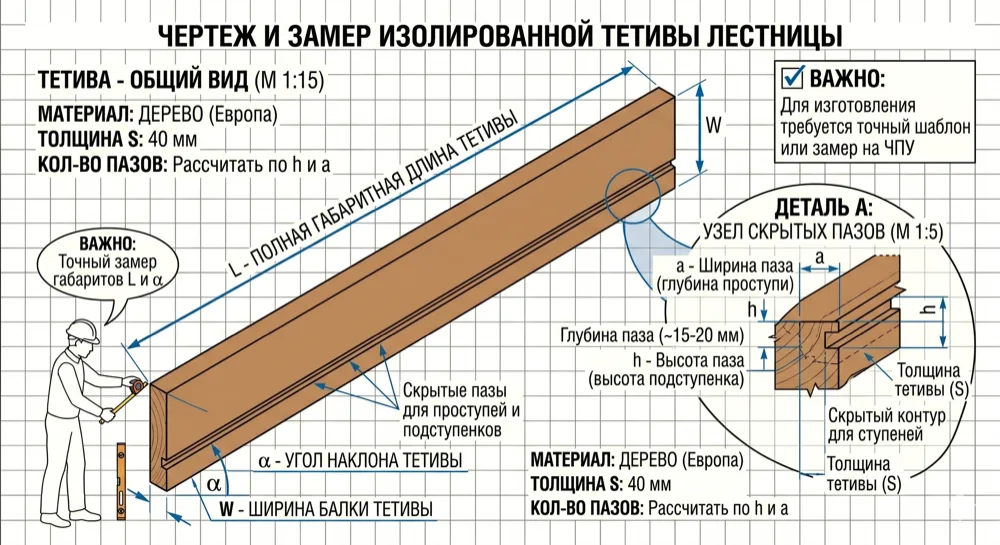
Tread overhang (nosing)
How far the horizontal tread overhangs the riser or frame. The «nose» visible from the side.
01 /Why the overhang is needed
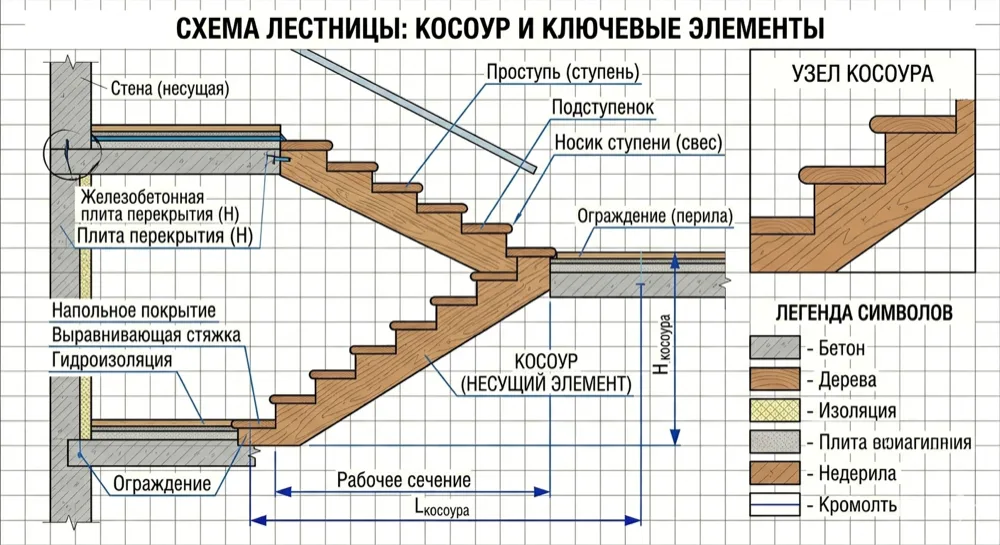
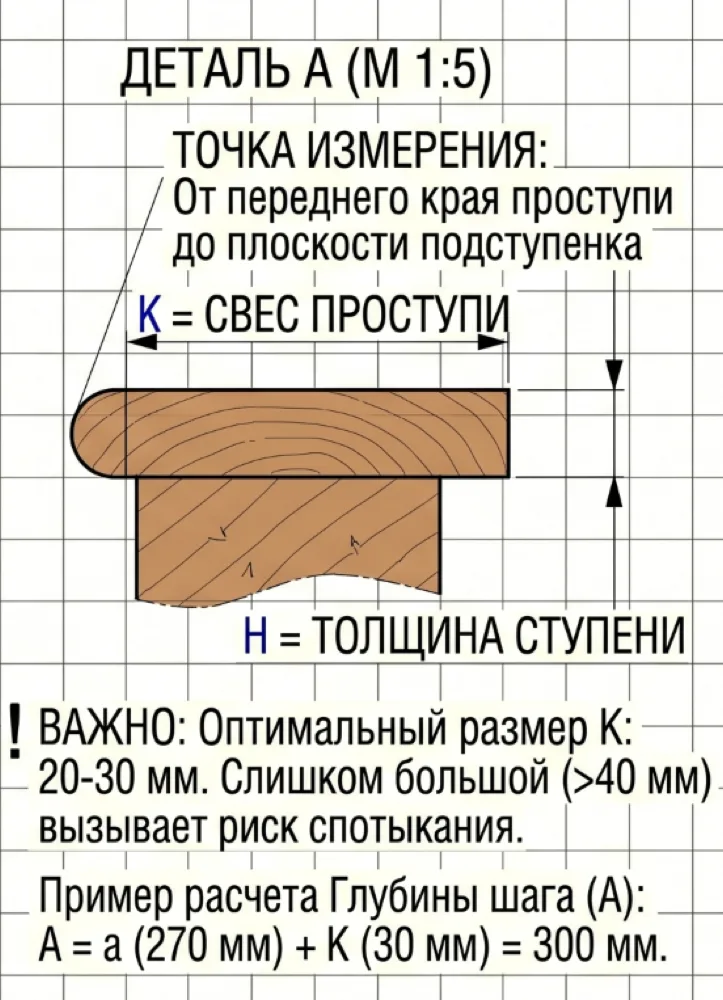
Tread overhang (in construction and carpentry sometimes called the «step nosing» or «caper») is the distance the horizontal tread board overhangs the vertical part (the riser) or the load-bearing frame.
Looking at the stair from the side (in cross-section), the overhang is the very forward-protruding «nose».
More usable foot space
The main purpose. For an adult to descend comfortably, the foot needs at least 270–300 mm of supporting depth. But building a stair with treads that wide takes up too much floor space. The overhang solves this: it artificially adds 2–3 cm of depth to the steps without lengthening the stair itself.
Aesthetics and tidy look
The overhanging edge hides the mounting joint between the horizontal and vertical step parts. The stair acquires a classic, finished look.
Impact protection
The nosing takes the brunt of shoe contact and protects the light vertical riser from dirt, scratches, and black sole marks.
02 /Strict safety rules when measuring
Overhang size is not just a design question — it is a safety question.
Optimal standard
20 to 30 mm. This is the safe and most comfortable option for a private house.
Critical limit
An overhang larger than 40 mm is strongly discouraged (50 mm max for open stairs without risers).
03 /What happens if the overhang is too large
Tripping effect
When climbing, you will constantly snag your shoe toe on this overhanging nose. It is the most frequent cause of falls on home-made stairs.
Breakage risk
If the tread is wood and the nose hangs 5–6 cm in the air, when someone steps with their full weight on the very edge (especially when descending), the board can crack along the grain and break off.